The first thing we did in class was to present our 3 image stories. We had the homework to come up with 3 images that told a story. After laying them on the tables the class had to choose the best story. Some how the story the class choose is one that I can't remember anymore. I say this because I could clearly remember other stories, but some how the one chosen was not that great because now is gone. To me the best one was a story about a car because mo matter how the order of the images where they created a story. Some how no one liked my story I thought mine was funny. My story had an image of a weeding couple, an old couple, and a guy pointing a gun to his head. No one liked the story, but everyone wanted to use my images in another exercise where we mixed everyones story to create a new story. I learned from the work that not everyone thinks a man married with the same old women for decades wanting to take his life is funny. I guess I was the only person that enjoyed watching Married With Children.
The professor Moss show the book French Fries. The book is a play about a fast food place. But the interesting part was how it was written and illustrated. The text had a design and personality that represented the characters. The name of the characters were not need because by looking at the color of the text or the font you could tell who was talking. Some pages look hard to read but that is what made it interesting the pages had character and style.
Monday, April 25, 2011

Day 7: Make a Story From Anything
After having to sit by order of our birthdays we had to come up with a short story. The instruction for the short story were simple and to the point. Make a story with a small number of items any items and we only had 15 minutes to do it. My team had six items in total. We came up with a murder scene involving a key chain, hair clip, sunglasses, utility knife, tape, and a bottle of sanitizer (yes a bottle of sanitizer). Others came up with weird stories other involving also murder. We learned from this exercise that making a story in 15 minutes is possible and that if we had more time we could have come out with something better and more developed. We learned that team work was really helpful to create and that the way the story was told could have a big impact on the viewer.
We discussed how anything tell a story and some are successful and others aren't. As example we saw two posters one with just letters and the other with graphics. The one with graphics told the story better.
Also Moss came up with one of his word breakdowns:
re
represent
present
presentation
representation
repress
sensation
sense = Sent
This means that we sent information.
We discussed how anything tell a story and some are successful and others aren't. As example we saw two posters one with just letters and the other with graphics. The one with graphics told the story better.
Also Moss came up with one of his word breakdowns:
re
represent
present
presentation
representation
repress
sensation
sense = Sent
This means that we sent information.
Fifth Response to the Book: Conceptualization
The first new thing that I learned from this chapter was the word Gestalt. Gestalt is a German word that meas shape, pattern, or form. Also learned, how we tend to group similar items by similarity and proximity. That our brain finishes an images if we seen a similar one finish before, this also is true with patterns like the example of the unfinished word "explore" in the book. Is funny and amazing how we could see a poster on the street have torn and we could say is a Coca-Cola ad by just seen a fraction of it.
In this chapter I also read some tips on brainstorming. One doesn't need to be in a group to brainstorm. All one needs to have a successful brainstorm is by asking your self questions and writing down your ideas. Self brain storming is hard but if done well and often is a great tool for anyone. But if one is going to brain storm in a group the author gives great advice which I noticed my instructor uses a lot. The most important things that are given as examples to my opinion is to have a agenda, set a moderator, and set a time limit. Basically what you want to achieve, someone that inspires other to talk, and how much time the group has to come out with ideas.
When coming out with design one must look at it's six perspectives. First, you must be able to describe the total design. Second, is your design similar to others and why is it better. Third, what does your design reminds you of. Forth, how is your design build. Fifth, what is the purpose of the design. Last, what are cons and pros of your work and how can it be reproduced. All of steps can be done in a mind map to help you work out your ideas.
In this chapter I also read some tips on brainstorming. One doesn't need to be in a group to brainstorm. All one needs to have a successful brainstorm is by asking your self questions and writing down your ideas. Self brain storming is hard but if done well and often is a great tool for anyone. But if one is going to brain storm in a group the author gives great advice which I noticed my instructor uses a lot. The most important things that are given as examples to my opinion is to have a agenda, set a moderator, and set a time limit. Basically what you want to achieve, someone that inspires other to talk, and how much time the group has to come out with ideas.
When coming out with design one must look at it's six perspectives. First, you must be able to describe the total design. Second, is your design similar to others and why is it better. Third, what does your design reminds you of. Forth, how is your design build. Fifth, what is the purpose of the design. Last, what are cons and pros of your work and how can it be reproduced. All of steps can be done in a mind map to help you work out your ideas.
Sunday, April 17, 2011
Day 6: Projects and Hulk
Thursdays class was interesting. I got told my whole project was wrong. I was told to use words to change the meaning of a picture. My picture was simple it was the cardboard boxes. By changing the meaning I understand something totally different. I took the approach of the imagination of a little kid. How a little kid could see an item the complete opposite of what it was. I used words like fort, spaceship and hat. Some how none thought that those word changed the meaning of the image of a cardboard. But to a kid it would have made sense I guess I have to start thinking like an adult.
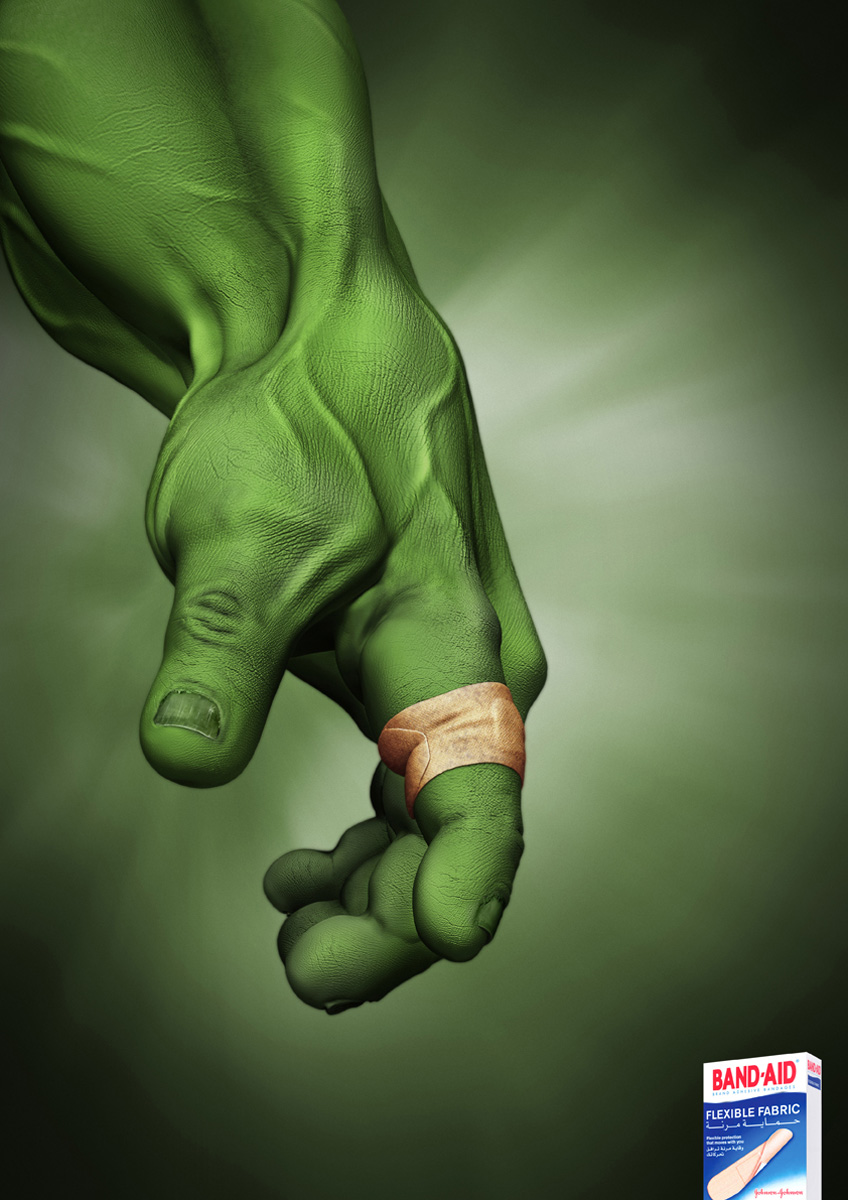
 Then we looked at some images that Moss put out for us to see. Most of which had something related to pop culture. The one on the board was a green muscular with a Band-Ade on one finger. Everyone pointed out that it was Hulk's hand. But Moss wanted us to look at what we actually knew from the image. That it was a muscular green hand with a Band-Ade. After a period of time we came to realize that it look a lot like the hand on the Sistine Chapel. The hand of god was our final deduction. But I totally think that was wrong, because it looks like Adam's hand not God's.
Day 5: Story Telling and Videos
We began the class by been asked a simple question. What is needed in order to tell a story? That was a question that seemed simple, but soon we realized that it wasn't. I am not really sure if the class is afraid of talking in class or if is just that we could not think of a good answer. After been pressured by professor Moss some started to throw words out on the air. After the class started participating we were able to come out with pieces for the puzzle. I could give you all the words but they are just to many. But here are some examples: plot, beginning, middle, end, characters, settings, plot twists, cliff hangers, rising action, etc ... One of the examples given by the class wasn't something that I heard before, this example/concept was rising action. One of the class mates defined this as "Building on a story with items related to the story to reach a climax."
Then we watched to videos from TED. The first video was we saw was from the speaker Amy Tan. She gave a talk about how we create. She gave a background of her life. She said something that to me was funny a monk saying "saving a fish from drowning" that basically if a monk wants to eat a fish they need to save it from dying of suffocation. She also mentioned the Greek muses. Which I knew I heard before that there were ten. I did some research and yes there are nine, but I found were I gotten the idea of ten. I read/heard before this phrase "Sappho of Lesbos was given the compliment of being called "the tenth Muse" by Plato." I WIN.
Then we saw the talk given by Elizabeth Gilbert. She gave her talk in the fear some artists have about their career and the muse that we all have. She wondered is her best works were already behind her. Also that some believe in having divine creative assistants like the Greeks and the Romans. She mentioned that the poet Ruth Stone believed that when a poem came to one it was in the air blowing like the wind and if she didn't get to a pencil and paper soon it would just look for the next poet to write it down. She made the connection with the word Ole = Ala = God. That made me think then when people are singing ole ole ole in a soccer game they are actually saying god god god? She said she believes in the muse, but that one has to just do the job and not be afraid.
Then Moss made a weird connection that also made sense.
spirit
inspirit
inspire
inspiration
ration = a ration of the spirit
a piece of spirit
Then inspiration is actually part of the spirit.
I think then that our muse is actually in us and sometimes it comes out and others it just doesn't. But like Gilbert said in her talk we need to just work and is the inspiration doesn't come out don't be afraid.
Monday, April 11, 2011
Day 4: Mind Map
This time I was not late to class. Actually I was late by one minute. But come one can the class really move that fast to rearrange the desks? I guess the can.
The easiest path for a fresh idea is through an open mind. Was one of the quotes I got from class. Which makes total sense, because if one is stuck thinking that nothing could be changed from the original then we wouldn't have change. Every idea from our modern society was an idea challenging an old way.
Then we watched the comics presentation. Which we had to watch again back home. I noticed something odd. The comic of the Pup from the video is the same image on the cover one of my books about webcomics. I thought it was cool to see the image on screen. I never knew who made the illustration for the book I have. Actually I never thought of researching to find out. Only after the class was over I decided to research the image.
Also, the rest of the class was spend on making our ideas for our idea maps. I realized that not every one in the class has a sense of humor nor two people thought the same. I can way to see Astrid's zombie idea map.
The easiest path for a fresh idea is through an open mind. Was one of the quotes I got from class. Which makes total sense, because if one is stuck thinking that nothing could be changed from the original then we wouldn't have change. Every idea from our modern society was an idea challenging an old way.
Then we watched the comics presentation. Which we had to watch again back home. I noticed something odd. The comic of the Pup from the video is the same image on the cover one of my books about webcomics. I thought it was cool to see the image on screen. I never knew who made the illustration for the book I have. Actually I never thought of researching to find out. Only after the class was over I decided to research the image.
Also, the rest of the class was spend on making our ideas for our idea maps. I realized that not every one in the class has a sense of humor nor two people thought the same. I can way to see Astrid's zombie idea map.
Research on the TED.org video
Actually the research of some pictures and/or subjects from Scott McCloud's presentation.


Charles Baggage: Was an inventor considered the "Father of the Computer." He started a mechanical computer he never completed.

Memex: Was also another that we could compare to the modern computer. It used film and projector screens. But it was possible to re-write stuff. The idea of the Memex was to have books, records and other media recorded in a compacted area.

Drew Weing: I could not find a lot of information on Weing except that he was a comic book artist and that finally I know whose art is on the cover of a book I have about Webcomics.

Sunday, April 10, 2011
Third Response to the Book "Inspiration"
First things first I learned that one can't wait for inspiration, but search for it. I noticed that when I wait for something to come to me it takes longer than when I look for it. The inspiration comes from everything we come in contact with any of our senses. The way we normally see an item is not the only way to see it. An example of the kid and a stick that turns into a guitar or sword is a great way to look at the concept. As kids we have our imagination working most of the time. I have heard that the dreams infants or even a fetus has are could be the best dreams anyone will ever have. As we grow old we lose the use of imagination. Most of us as art majors we have that a little more developed than others. But we still need to push our imagination more and imagine/find different uses for items we have or wish to have.
An idea can come at any moment and in the chapter it says that Eureka can come at any second. But, the thing that called my attention the most is that the moments of revelation come when thinking stops. This is true in my case usually when my brain goes into that DUH stage. When my brain just naturally starts wondering and I have nothing in my head, but at the same time random ideas. I will get one thing clear I do not do drugs other than coffee or tea. There is no need for that my brain is weird as it is.
Once I finish a project I am happy, but at the same time I notice that what could have been better. I wonder if old painters and sculptors ever thought like this. The book states that when you work hard on a piece the energy used to created will aways be present in the piece. But does that means that if you feel that the piece is perfect? I guess it all depends on the artist.
Another aspect of this chapter that I liked was about influences. The way one can be influenced by another artists, but you have to learn just to be inspired and make new art of it. But your own art and not make a style of art that is obvious that was someone else's. Basically is ok to look for inspiration in other artists, but make it that just inspiration. Always keep your mind open for new ideas and new inspirations.
Once I finish a project I am happy, but at the same time I notice that what could have been better. I wonder if old painters and sculptors ever thought like this. The book states that when you work hard on a piece the energy used to created will aways be present in the piece. But does that means that if you feel that the piece is perfect? I guess it all depends on the artist.
Another aspect of this chapter that I liked was about influences. The way one can be influenced by another artists, but you have to learn just to be inspired and make new art of it. But your own art and not make a style of art that is obvious that was someone else's. Basically is ok to look for inspiration in other artists, but make it that just inspiration. Always keep your mind open for new ideas and new inspirations.
Day 3: I Don't Like Attention (sometimes)
I think the first thing to say is that I don't like attention. I don't really like going on front of the class. I think is has to do mainly because of my eye. Is hard to explain to people that eye is blind and I can't controlled. The reason I brought this up is because I realized something. I had realized that in this class Moss is going to push me and all of us to be out spoken. I don't mind speaking from my desk, but been at front is different. But as going out to the work force gets closer I need to get over it. I will have to talk to clients or co-workers. Probably talk in front of work of people about a project. I just have to learn not to be so self conscious. Before all these we also had to rank our illustrations and I learned how hard is to get group of people to decide on how good the illustrations were. Also, when asked if we knew an architect I realized that I didn't know any.
Wednesday, April 6, 2011
Second Response to the Book
After doing the second reading a thought keeps going around in my head. The writer of the book is a set and costume designer! Well that is what he studied. He is also a graphic designer and a teacher. I think is interesting how he started in one field then moved to another. This is important because like he said design is no matter what type always has the same steps to follow. Even if the steps are not in order, but they must all be visited.
The seven steps will help you answer a problem. Because design is a solution to a problem. But many solutions can be used to solve the problem. The author says not to close your mind to only one but open it and explore all the solutions. I think this is great advice. I have heard this advice before, but no matter who says it is great advice. The author compares design with a romantic relationship. One must go through the process in order to get what one wants at the end. Also that an idea for a design should always keep evolving, but not forget the idea and keep the energy. The writer gives his opinion that design should not only be for monetary gain, but to actually give something back to the society. To give back something that is going to be useful and beneficial to all. The writer is also really interested in the environment if that was not clear in the last sentence.
I am not sure how can I compare my self to him. In high school I was in the drama club. I was the set and prop maker. As a tile installer I always put all my brain into the floors, countertops or showers I was installing. I think that we both have tried different form of art for the joy of them and the fulfillment it gives us. I like to do all kinds of art, because they make me fell good. I love my sculptures, photos, paintings. Too bad I can't yet say the same about my graphic design or my drawing. I think I got off of track. Sorry for that but it makes me happy thinking of what I have done in my life.
The seven steps will help you answer a problem. Because design is a solution to a problem. But many solutions can be used to solve the problem. The author says not to close your mind to only one but open it and explore all the solutions. I think this is great advice. I have heard this advice before, but no matter who says it is great advice. The author compares design with a romantic relationship. One must go through the process in order to get what one wants at the end. Also that an idea for a design should always keep evolving, but not forget the idea and keep the energy. The writer gives his opinion that design should not only be for monetary gain, but to actually give something back to the society. To give back something that is going to be useful and beneficial to all. The writer is also really interested in the environment if that was not clear in the last sentence.
I am not sure how can I compare my self to him. In high school I was in the drama club. I was the set and prop maker. As a tile installer I always put all my brain into the floors, countertops or showers I was installing. I think that we both have tried different form of art for the joy of them and the fulfillment it gives us. I like to do all kinds of art, because they make me fell good. I love my sculptures, photos, paintings. Too bad I can't yet say the same about my graphic design or my drawing. I think I got off of track. Sorry for that but it makes me happy thinking of what I have done in my life.
Tuesday, April 5, 2011
First Response to the Book
First of all, the book just got to my hands today. By looking through the pages of the book I got interested in some of the titles and the pics. It seems like a really interesting literature. Then after a few minutes of just looking through it I started reading. By reading the preface I learned two things right away. The book is not just about graphic design, but is about all the different types of design. Also, the book is divided in sections corresponding to the design process. The writer of the book, Karl Aspelund, believes that teaching design requires a guidebook. While teaching design the writer noticed that books in this subject were missing something. The process from inspiration to production was never in other books. In his book we are going to learn the design process, as is divided in sections. I like that he says how the book was made. He wrote it, but it had collaboration of students and teachers. It seems that he put all his knowledge and heart into the book. He wanted to create a book that students, graduates or any designer could use. I hope that at the end of it I get lots of knowledge from it and learn to use the design process.
Friday, April 1, 2011
Day 2: What If?
I got to class and all the sits in the front where taken. I sit on the back then found one at the front. But just after I sat down we where told to move to another room. I think the word "crap" came out of my mind. So we moved to the other class room in order to have more space. For some reason I just couldn't be all there in class. My brain was still tired. I sleep well, ate and even drank a Monster. But some how I still could not make my brain work. Our instructor made us have a team work experiment. We were asked to sit in alphabetical order. I changed sits 4 times in the whole duration of the class. To me the experiment was to learn to work as a team. My brain finally reacted when we were asked What If? Then my first thought was my eye. I lost my eye when I was 8. During the whole time other people were answering "what if?" all I could think of my eye. I am of the thought that every action has a reaction. I think that my whole life would had been different. I like my life as it is I have a beautiful girlfriend and an awesome baby boy. Well getting back to my eye I can't see out of it. With the future of 3D getting a new start I would not be able to be involved in that kind of design. But again asking "What if?", what if someone learns a way to transplant a whole eye? What if someone has an idea to a new invention to make me see again? What if my eye never gets fixed? All these are just possibilities to my future. But all I care about is to finish school and get the best out of it. Learn from teachers and other students, but most importantly on my own. I what to give a awesome life to those two beauties in my heart. She was the reason why I decided to go back to school and he was always in my thoughts even years before he was born. I am studying for my family and because I like the arts. I will be the first in my family to get a college education. That is why the question "What if?" really got me excited. One idea took me to the next and made my brain wake up.
Subscribe to:
Comments (Atom)